

From Classroom to Corporate: How Each PGDM Specialization Prepares You for Real-World Careers
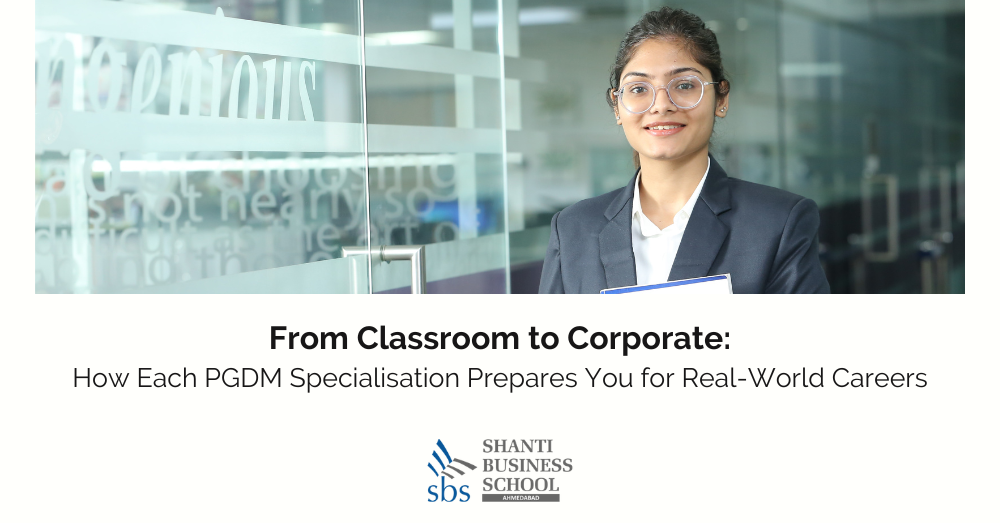
Management education today is no longer limited to textbooks and classroom discussions. Businesses expect graduates who can understand markets, solve real problems, analyze data, manage people, and make strategic decisions. This is why modern PGDM programs focus not only on academic knowledge but also on preparing students for the realities of corporate life.
Each PGDM specialization builds a unique set of professional capabilities that align with industry expectations. By combining theoretical learning with practical exposure such as internships, case studies, simulations, and live projects, students gradually transition from classroom learners to corporate professionals. Understanding how each specialization prepares students for real-world careers helps aspirants choose a path that aligns with both their strengths and career ambitions.
Marketing: Understanding Customers and Driving Business Growth
Marketing is often considered the most dynamic and creative domain in management. A PGDM specialization in Marketing trains students to understand consumer behavior, market trends, brand positioning, and competitive strategies.
In the classroom, students learn about market research, advertising strategies, product management, and digital marketing techniques. These concepts are reinforced through case studies, marketing simulations, and live projects with companies.
When students enter the corporate world, this knowledge translates into roles such as brand executive, digital marketing strategist, sales manager, or product marketing specialist. Marketing professionals are responsible for connecting businesses with customers and ensuring that products and services reach the right audience effectively.
Finance: Building Analytical Thinking and Strategic Decision-Making
Finance specialization focuses on developing strong analytical and quantitative skills. Students learn financial planning, investment analysis, corporate finance, risk management, and financial markets.
Through financial modeling exercises, stock market simulations, and real-world case studies, students gain the ability to interpret financial data and evaluate business performance. This analytical foundation prepares them for corporate roles where financial insights drive business decisions.
Graduates specializing in finance often begin their careers as financial analysts, banking professionals, investment advisors, or risk management executives. As they gain experience, they contribute to strategic planning and financial decision-making at higher management levels.
Human Resources: Managing Talent and Organizational Culture
Human Resources specialization focuses on the most valuable asset of any organization—its people. HR professionals play a critical role in recruitment, employee development, performance management, and organizational culture.
In a PGDM HR program, students study subjects such as talent acquisition, leadership development, organizational behavior, and employee engagement strategies. Role-playing exercises, HR simulations, and case discussions help students understand workplace dynamics.
When they step into corporate environments, HR graduates manage hiring processes, training initiatives, and employee relations. Their ability to balance organizational goals with employee well-being makes them essential contributors to long-term business success.
Business Analytics: Transforming Data into Strategic Insights
As organizations become more data-driven, Business Analytics has emerged as one of the most sought-after management specializations. Students learn to analyze complex datasets, identify patterns, and generate insights that guide business strategy.
During the program, students work with analytical tools, statistical models, and business intelligence platforms. They also study how data supports decision-making across marketing, finance, operations, and customer experience.
In corporate roles, analytics professionals work as business analysts, data consultants, or strategy analysts. Their ability to translate raw data into meaningful recommendations helps organizations improve efficiency, predict market trends, and make informed decisions.
Supply Chain and Operations: Ensuring Business Efficiency
Supply Chain and Operations specialization prepares students to manage the processes that keep businesses running smoothly. From procurement and production planning to logistics and distribution, operations professionals ensure that resources move efficiently through the value chain.
Students study supply chain design, operations strategy, quality management, and logistics planning. Industry projects and case studies help them understand how global supply networks function.
Graduates entering this field often work as operations executives, supply chain analysts, or logistics managers. Their role is crucial in improving productivity, reducing costs, and ensuring timely delivery of products and services.
Digital Marketing and Brand Communication: Navigating the Online Economy
The rapid growth of the digital economy has created a strong demand for professionals who understand online marketing ecosystems. PGDM programs that offer Digital Marketing and Brand Communication focus on areas such as search engine optimization, social media marketing, online advertising, and content strategy.
Students learn how brands build digital presence and engage with audiences across multiple platforms. Practical assignments often include managing digital campaigns, analyzing online engagement metrics, and developing content strategies.
In the corporate world, these skills translate into roles such as digital marketing manager, SEO specialist, content strategist, or brand communication executive.
Bridging the Gap Between Classroom and Corporate
The real strength of a PGDM program lies in its ability to connect academic learning with practical application. Internships, industry interactions, corporate mentorship programs, and real business projects help students understand how theoretical concepts function in real business environments.
This combination of knowledge and experience builds confidence, problem-solving ability, and professional readiness—qualities that employers value highly when recruiting management graduates.
The journey from classroom learning to corporate success depends not only on the specialization students choose but also on the learning environment that prepares them for real business challenges. Shanti Business School focuses on industry-aligned PGDM programs that combine academic knowledge with practical exposure, corporate interaction, and skill-based training. This approach helps students build confidence, develop professional capabilities, and transition smoothly into real-world careers across diverse industries.