
Insights & Stories

Choosing a Career Abroad After PGDM/MBA: Opportunities, Work Visa Rules & Job Markets Explained
Shanti Business School prepares students for global career opportunities through PGDM programs that focus on practical learning, industry interaction, and developing a global business perspective. With an emphasis on communication, analytical thinking, and real-world application, SBS helps students build the confidence and capabilities needed to compete in international job markets.
Read article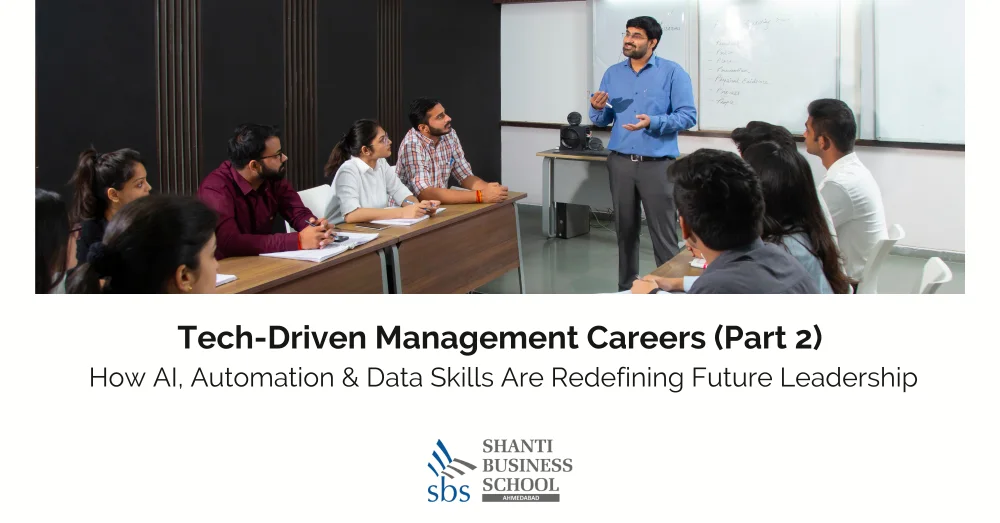
Tech-Driven Management Careers (Part 2): How AI, Automation & Data Skills Are Redefining Future Leadership
Today, organisations are not only looking for traditional managers—they are looking for professionals who understand data, digital platforms and technology-driven business models. Today’s leaders are not only expected to understand business strategy—they must also understand the technologies that power modern organisations. Artificial Intelligence Is Reshaping Business Strategy Artificial Intelligence (AI) is no longer limited to technology companies. Businesses across industries—from finance and healthcare to retail and logistics—are integrating AI into their operations. AI systems analyse customer preferences, automate processes, forecast demand and improve operational efficiency. For management professionals, this means developing the ability to interpret insights generated by intelligent systems. While managers may not need to build algorithms themselves, they must understand how AI tools influence decision-making. As organisations adopt AI-driven strategies, professionals who can connect business objectives with technological solutions will be highly valued. Automation and the Changing Nature of Work Automation is another factor reshaping management careers. Routine tasks such as data processing, reporting and basic analysis are increasingly handled by automated systems. This shift is pushing management roles toward more strategic and creative responsibilities. Instead of focusing on repetitive processes, future managers will focus on interpreting insights, designing strategies and managing innovation. Automation does not replace management professionals—it enhances their ability to focus on higher-value activities. In this new environment, professionals who combine business knowledge with technological awareness will have a clear advantage. The Growing Importance of Data Literacy One of the most important skills for future managers is data literacy—the ability to understand, interpret and communicate insights from data. Modern organisations generate vast amounts of information through customer interactions, digital platforms, financial transactions and operational systems. Managers who can analyse this information effectively are able to identify opportunities, anticipate risks and make smarter decisions. Data literacy does not necessarily mean becoming a technical expert. Instead, it involves understanding how data supports business strategy and how analytical insights can guide leadership decisions. Cross-Functional Tech Skills Are Becoming Essential Another defining characteristic of tech-driven management careers is the need for cross-functional skills. Business professionals are increasingly working alongside technology teams, data scientists, product developers and digital strategists. This collaboration requires managers to understand the language of technology while maintaining a strong foundation in business fundamentals. Professionals who can bridge this gap between technology and management often become key contributors to innovation and growth. As industries become more digitally integrated, the ability to work across functions will become a core leadership capability. Future Career Paths in Tech-Driven Management The demand for technology-aware management professionals is already visible in emerging roles such as product manager, growth strategist, digital transformation consultant, analytics manager and innovation lead. These careers exist across industries, including consulting, finance, healthcare, technology, retail and manufacturing. What makes these roles particularly attractive is their long-term relevance. As digital transformation continues to accelerate, organizations will continue to seek leaders who can understand both business strategy and technological innovation. As technology continues to reshape the business landscape, organizations are increasingly seeking management professionals who can combine strategic thinking with digital awareness and data-driven insights. Preparing for such evolving careers requires an education that goes beyond traditional classroom learning. Shanti Business School addresses this need through industry-oriented PGDM programs that emphasize technology integration, analytical thinking and practical business exposure. By connecting academic learning with real-world business challenges and emerging digital trends, SBS helps students develop the skills, adaptability and confidence needed to succeed in the rapidly growing field of tech-driven management careers.
Read article
The Rise of Tech-Driven Management Careers - Why Data, Digital & Business Analytics Are Booming - Part 1
Over the past decade, technology has reshaped nearly every aspect of business. From how companies reach customers to how they make strategic decisions, the influence of technology is stronger than ever. As a result, management careers are evolving rapidly. Today, organisations are not only looking for traditional managers—they are looking for professionals who understand data, digital platforms, and technology-driven business models.
Read article
From Classroom to Corporate: How Each PGDM Specialization Prepares You for Real-World Careers
Management education today is no longer limited to textbooks and classroom discussions. Businesses expect graduates who can understand markets, solve real problems, analyze data, manage people, and make strategic decisions. This is why modern PGDM programs focus not only on academic knowledge but also on preparing students for the realities of corporate life.
Read article
How Management Specialisations Shape Your Career: Real Job Roles, Salaries & Industry Demand
A management degree does more than add a qualification to your résumé—it defines the direction of your professional life. The specialisation you choose during your PGDM or MBA determines the roles you enter, the industries you work in, your earning potential, and how your career evolves over time. In today’s dynamic business environment, understanding how each management specialisation shapes real-world careers is critical for making an informed decision.
Read article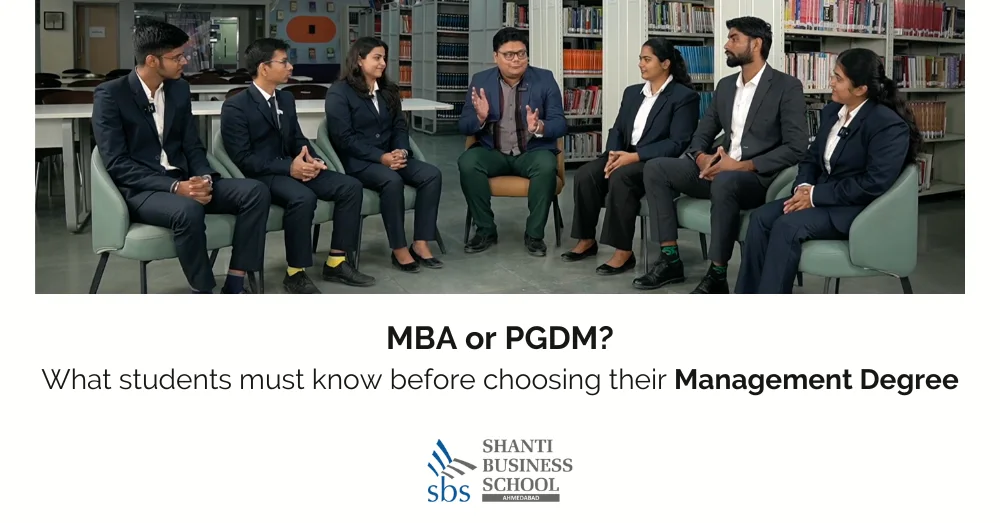
MBA or PGDM? What Students Must Know Before Choosing Their Management Degree
Choosing between a Master of Business Administration (MBA) or a Post Graduate Diploma in Management (PGDM) is one of the most crucial decisions management aspirants have to take and the confusion is completely natural. While both programs aim to build strong business leaders, the difference lies in how they are designed, how they are delivered and how closely they connect with the industry.
Read article
Top Trending PGDM/MBA Specialisations for 2025–2030 — Careers With the Highest Future Growth - Part 2
As organisations scale across borders and industries, the demand for leaders who can manage operations, supply chains, international markets, and long-term impact is rising sharply. This second part explores PGDM/MBA specialisations that will define leadership, resilience, and global relevance between 2025 and 2030
Read article
Top Trending PGDM/MBA Specialisations for 2025–2030 — Careers With the Highest Future Growth - Part 1
Shanti Business School’s PGDM programs are designed around industry relevance, practical exposure, and skill-based learning. The curriculum focuses on emerging domains like analytics, digital strategy, finance transformation, and people leadership—ensuring students don’t just earn a degree, but develop capabilities demanded by modern organisations.
Read article
Best PGDM Specializations for Future Careers (Part 2): SCM, Digital, IB & How to Make the Right Choice
Best PGDM Specializations for Future Careers (Part 2): SCM, Digital, IB & How to Make the Right Choice
Read article